Dental Implants
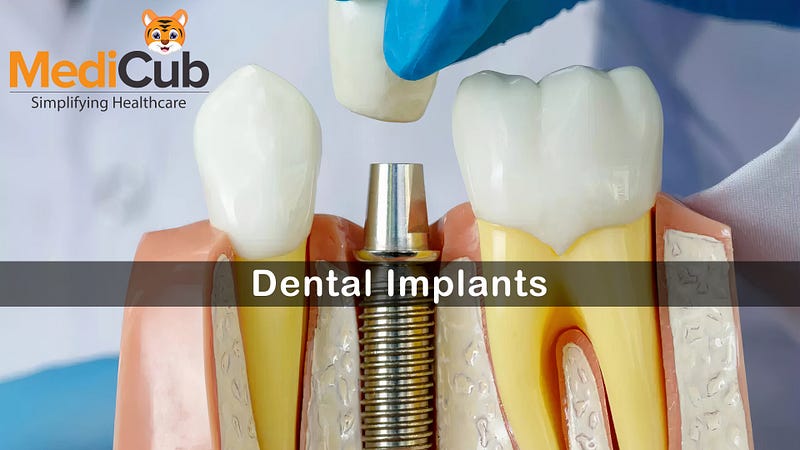
A Dental Implant (also known as endosseous implant) is a prosthesis that interfaces with the bone of the jaw or skull to support a dental prosthesis such as crown, bridge, denture or facial prosthesis or to act as an orthodontic anchor.
The dental implant surgery procedure depends upon type of implant and the condition of the jaw bone. Major benefit of implants is solid support for your new teeth.
Indications :
Dental implants are surgically placed in the jaw bone where they serve as the roots of the missing teeth. The titanium in the implants fuses with the jaw bone which prevents slipping and bone damage. In general dental implants are indicated if :
— One or more missing teeth.
— Have adequate bone to secure implant or able to have a bone graft.
— Have healthy oral tissues.
— Unable or unwilling to wear dentures.
— Willing to commit several months to the process.
— Away from habits like smoking tobacco. Etc.
Classification of Dental Implants:
1. Based on implant design:
a. Endosteal: device which is placed in the alveolar bone or the basal bone of the mandible and the maxilla which transects only one cortical plate.
b. Subperiosteal: placed directly beneath the periosteum overlying the bony cortex
c. Transosteal (staple bone implant/trans mandibular implant): combines the subperiosteal and endosteal components. Combines the both cortical plates
d. Intramucosal: inserted into the mucosa, which is used as an attachment site for metal inserts.
2. Based on Attachment mechanism: a. Osseointegration: Direct contact between the bone and the surface of the loaded implant
b. Fibro Integration: Complete encapsulation of the implant with the soft tissues (periodontal fibers)
3. Based on Macroscopic body design of the implant: a.Cylinder, b. Thread, c. Plateau, d. Perforated, e. Solid, f. Hollow/vented.
4. Based on surface of the implant: a. Smooth, b. Machined, c. Textured, d. Coated
5. Based on the type of implant material: a. Metallic : Most popular material in use today is TITANIUM (others include Stainless steel, Cobalt Chromium Molybdenum alloy, Vitallium), b. Ceramic/Ceramic coated, c. Polymer (polymethylmethacrylate & polytetrafluoroethylene), d. Carbon compound (carbon with stainless steel)
Procedure :
Preparation : The planning process of dental implants may involve a variety of dental specialists, including a doctor who specializes in conditions of mouth, jaw, and face (oral and maxillofacial surgeon), a dentist specialized in treating structures that support the teeth such as gums and bones (periodontist), a dentist who designs and fits artificial teeth (prosthodontist). As the dental implants require more than one surgical procedures we must have a thorough evaluation to prepare the process which includes comprehensive dental examination (which includes x-ray, CBCT- 3Dimaging, models made of patient’s teeth and jaw), Review of the medical history, Treatment plan.
Surgery : Anesthesia options available for the surgery include Local anesthesia, Sedation or General anesthesia. Dental implant surgery is generally an out patient surgery performed in stages with healing time between procedures. The process of placing dental implants involves multiple steps including :
- Damaged tooth removal,
- Jaw bone preparation (bone grafting) if needed,
- Dental implant placement,
- Bone growth and healing,
- Abutment placement,
- Artificial tooth placement.
The entire process can take few months from start to finish. Much of the time is devoted to healing and waiting the growth of new bone
Bone grafting : If the jaw bone isn’t thick enough or is too soft, there is a need for bone grafting before dental implant surgery. A bone graft would create a more solid base for an implant. There are several bone graft materials which include natural bone graft or a synthetic bone graft.
During surgery surgeon cut opens the gum, holes are drilled in to the bone where the implant metal post will be placed. After the placement osseointegration begins where the jaw bone grows in to and unites with the dental implant. After osseointegration is complete an abutment should be placed over the implant on to which tooth colored crown is placed (removable/fixed).
Post surgery care: one may experience swelling in the gums and face, bruising of the skin and gums, pain at the implant site, minor bleeding. Pain medications,antibiotics are required after the dental implant surgery, Practicing excellent oral hygiene habits, Consulting the dentist regularly, Avoiding damaging habits (chewing hard items, tobacco smoking, caffeine items)
Advantages of dental Implants:
- To overcome the drawbacks of removable prosthesis
- Bone maintenance of height and width
- Ideally esthetic tooth positioning
- Improved psychological health
- Increased stability in chewing
- Increased retention
- Eliminates need to involve adjacent teeth.
Disadvantages of dental implants:
- Most expensive
- Time consuming procedure
- Contraindicated in patients with poor healing capacity.
About the author:
Name: Dr. Abhilash Dandy
Qualification: B.D.S
I graduated as a Dentist from Sibar Institute of Dental Sciences, Guntur. I have done my externship program at Rutgers school of dental medicine, New Jersey, USA. I have clinical experience of 3 years and currently working as Administrative head — Dental wing in MediCub India, Hyderabad.


Comments
Post a Comment